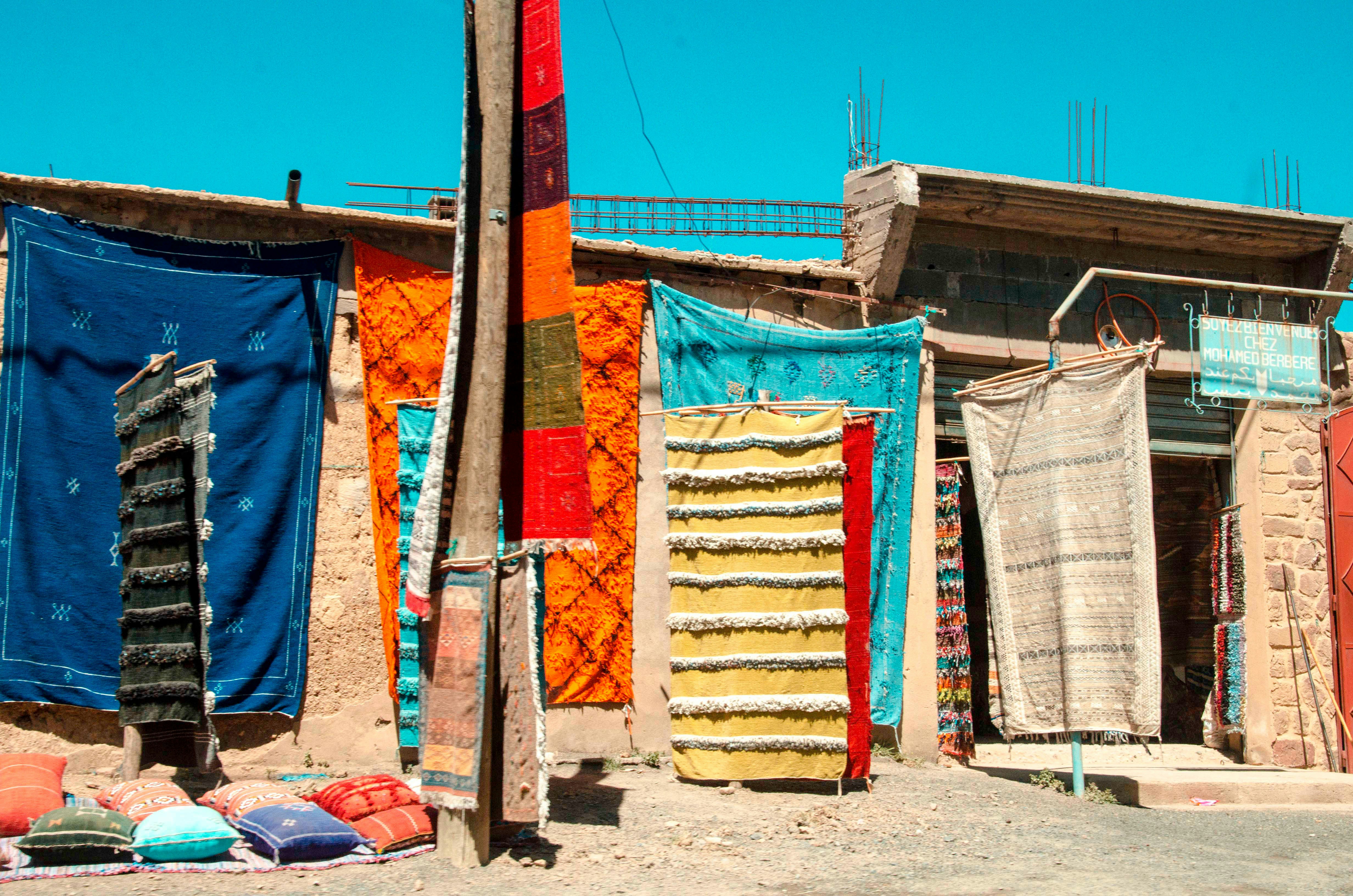
Introduction to Beni Ourain Carpets
Beni Ourain carpets boast a rich history deeply rooted in the cultural heritage of the Berber tribes of the Atlas Mountains in Morocco. Originating from this geographical region, these handwoven treasures are crafted using techniques passed down through generations, making them not only functional pieces of art but also significant symbols of Moroccan tradition. The carpets are primarily made from the fleece of sheep indigenous to the area, known for their exceptional quality and warmth, which adds to the distinctive character of each rug.
The weaving process of authentic Beni Ourain carpets is labor-intensive and requires a high level of skill, patience, and dedication. Artisans typically work on a horizontal loom, using natural dyes derived from plants and minerals. This traditional method results in a uniquely textured fabric that combines geometrical patterns with a minimalist aesthetic. The designs often reflect the artistic expression of the weaver’s thoughts and experiences, making each piece more than just a rug; it is a manifestation of personal and cultural storytelling.
In the modern era, Beni Ourain carpets have gained international appreciation for their versatility and timeless elegance, adapting to various interior styles while retaining their authenticity. Many interior designers and homeowners favor these handwoven rugs over machine-made counterparts for their quality, durability, and individuality. The unique imperfections of authentic Beni Ourain carpets, along with their vibrant histories, make them collectible items that resonate with those who appreciate craftsmanship and heritage. Therefore, understanding their origins and the artistry involved in their creation is essential when comparing handmade pieces to mass-produced alternatives.
The Art of Handweaving
The process of handweaving authentic Beni Ourain carpets is a testament to the artistry and craftsmanship that has been passed down through generations. Each carpet is meticulously crafted by skilled artisans who invest a substantial amount of time and effort into creating these unique pieces. The handweaving process begins with selecting high-quality wool, often sourced from local sheep, which is appreciated for its softness and durability. The wool is then carefully washed and dyed using natural pigments, ensuring that each color retains its vibrancy over time.
Once the materials are prepared, the weaving process can commence. Each artisan employs traditional techniques that require precision and an eye for detail. As they weave, they follow patterns that have been traditionally passed down, infused with personal touches that result in variations in design. This aspect reflects the individuality of each carpet, as no two pieces are ever identical, which sets them apart from machine-made rugs that adhere to uniform patterns and standardization.
The unique characteristics of handwoven Beni Ourain carpets include irregularities in pattern and texture, which are often cherished by buyers for their authenticity. These imperfections enhance the charm and character of the rugs, providing a warmth and narrative that machine-made products cannot replicate. Furthermore, the labor-intensive nature of handweaving is evident not only in the final product but in the time spent by weavers—sometimes taking weeks or months to complete a single carpet. This labor of love encapsulates the rich cultural heritage and tradition of the Berber communities from which these authentic pieces originate.
Investing in a handwoven Beni Ourain carpet means acquiring a distinctive work of art that embodies craftsmanship, culture, and a story, making it a valuable addition to any home.
Benefits of Choosing Handmade Carpets
When considering rugs for your home, selecting an authentic Beni Ourain carpet comes with numerous advantages, especially when comparing handmade pieces to machine-made alternatives. One of the most notable benefits of choosing a handwoven rug is its durability. Handmade carpets are often crafted from high-quality materials such as wool, which is both resilient and long-lasting. This ensures that the carpet can withstand foot traffic and resist wear over time, maintaining its beauty and functionality for generations.
Additionally, a handwoven Beni Ourain carpet offers a level of uniqueness that machine-made rugs simply cannot replicate. Each handmade piece boasts intricate patterns and designs that are often rooted in the rich cultural heritage of the Berber tribes in Morocco. This individuality means that every tapestry tells a story, thereby adding a distinctive character to your home decor. In contrast, mass-produced rugs are created using standardized designs that lack the same creative expression and may result in a less personalized aesthetic.
Cultural authenticity is another critical factor when opting for handmade carpets. By choosing an authentic Beni Ourain, you are not just acquiring a decorative item but also supporting the heritage of skilled artisans who have been perfecting their craft for centuries. This fosters an appreciation for traditional techniques and sustains the livelihoods of these craftspeople, ensuring that their knowledge and skills are passed on to future generations. Furthermore, investing in handmade carpets promotes sustainable practices, as they are often produced using environmentally friendly methods, contrasting sharply with the more industrialized processes behind many machine-made rugs.
Ultimately, the decision to select a handmade carpet is not solely based on aesthetics but extends to a broader commitment to quality, individuality, cultural preservation, and sustainability. Each authentic Beni Ourain rug represents a heritage of craftsmanship that elevates both your living space and the lives of artisans behind its creation.
The Environmental Impact of Machine-Made Rugs
Machine-made rugs, while often more affordable and accessible, pose significant environmental challenges that warrant consideration. One primary concern is the reliance on synthetic materials, such as nylon or polyester, which are derived from petroleum-based products. These synthetic fibers not only contribute to pollution during their production but also create long-lasting waste in landfills, as they are notoriously difficult to biodegrade. In contrast, authentic Beni Ourain carpets are crafted from natural wool, a renewable resource that is both biodegradable and sustainable. The choice of materials plays a significant role in reducing environmental harm.
Another critical aspect of machine-made rugs is their carbon footprint. The mass production process often entails large-scale manufacturing facilities, which typically rely on fossil fuels for energy. This leads to significant greenhouse gas emissions throughout the production, shipping, and distribution processes. Handwoven carpets, such as Beni Ourain designs, are often produced on a smaller scale, with artisans using traditional techniques that require less energy. The localized production not only minimizes the carbon footprint but also supports local economies and craftsmanship.
Furthermore, the focus on quantity in the machine rug industry often undermines quality and longevity. While machine-made options are marketed as quick solutions, they frequently lack durability compared to handmade carpets, which can withstand the test of time. This results in a cycle of consumption where consumers repeatedly replace inferior products, leading to increased waste and resource depletion. By choosing handwoven alternatives like authentic Beni Ourain carpets, consumers can make a more sustainable choice, paving the way for a more eco-friendly future while enjoying the unique aesthetic and warmth that handcrafted textiles offer.
Maintenance and Longevity
When considering carpets, the difference between authentic Beni Ourain rugs and machine-made alternatives is often reflected in their maintenance requirements and lifespan. Handwoven Beni Ourain carpets, known for their intricate designs and quality craftsmanship, are naturally more durable compared to mass-produced rugs. Their longevity largely depends on proper care, which is essential for preserving their beauty and functionality over time.
Regular maintenance for an authentic Beni Ourain requires gentle methods to ensure the delicate fibers remain intact. Vacuuming on a low setting is recommended to eliminate dust without causing damage to the wool fibers. Spot cleaning should be carried out promptly with mild soap and water to avoid stains setting in. For more thorough cleaning, professional laundering is suggested, preferably by someone familiar with the intricacies of handwoven carpets. This careful approach helps in maintaining the character and texture unique to handmade rugs.
In contrast, machine-made carpets may seem easier to maintain due to their synthetic fibers, which can often withstand harsher cleaning methods. However, they typically lack the same level of durability and can show signs of wear and tear much sooner. The loss of color vibrancy and development of fraying edges are common issues with mass-produced rugs, limiting their lifespan despite ease of maintenance.
Moreover, while authentic Beni Ourain carpets may require more diligent care, their ability to last several generations makes them a worthwhile investment. The craftsmanship involved in their creation ensures that they can withstand the test of time, assuming appropriate maintenance practices are implemented. This stands in stark contrast to the shorter lifespan of machine-made rugs, ultimately making handwoven options a superior choice for discerning buyers.
Aesthetics and Design Flexibility
The aesthetic appeal of authentic Beni Ourain carpets is one of the primary reasons they are sought after by homeowners and interior designers alike. Each handwoven piece embodies a unique blend of artistic patterns and rich textures, derived from the traditional craftsmanship of the Berber tribes in Morocco. These masterpieces can transform any interior space, adding warmth and character that is often absent in machine-made alternatives. The harmonious use of natural dyes and organic materials enhances their visual allure, making them an ideal choice for various decor styles, from contemporary to bohemian.
One of the most notable aspects of handwoven Beni Ourain carpets is their design flexibility. Each rug is crafted individually, resulting in one-of-a-kind designs that cannot be replicated. This intrinsic uniqueness allows homeowners to express their personal style and preferences through their choice of flooring. In contrast, machine-made rugs are typically produced in bulk, leading to repetitive patterns and a lack of original designs. While they may offer a broader range of options in terms of colors and styles, they often fall short in the character and individuality that can truly define a space.
<pmoreover, a="" allowing="" also="" alternatives.="" and="" appreciation="" artistry,="" as="" atmosphere,="" authentic="" beneficial.="" beni="" but="" by="" captivating="" carpets="" celebration="" comfort="" contemporary="" contribute="" cozy="" craftsmanship,="" decor="" design="" elegance="" evolves,="" experience="" fibers="" fleeting="" for="" found="" functionally="" goods.="" growing="" handmade="" handwoven="" home="" in="" integration="" into="" invite="" is="" making="" market="" mass-produced="" not="" of="" offering="" one’s="" only="" ourain="" out="" p="" pieces="" plush="" provide="" rich="" saturated="" simply="" stand="" synthetic="" tactile="" textures="" that="" the="" their="" them="" there="" these="" timeless="" to="" transcends="" trends.Investment Value: Handmade vs. Machine-Made
When considering the investment value of carpets, particularly in the context of authentic Beni Ourain rugs, it is essential to understand the fundamental differences between handmade and machine-made options. Although machine-made rugs may initially appear more cost-effective due to their lower price points, they often lack the long-term value and unique characteristics that accompany handcrafted pieces.
Handwoven Beni Ourain carpets, renowned for their intricate designs and superior craftsmanship, are more than mere decorative items; they embody a rich cultural heritage and tell a unique story through their intricate patterns and textures. The time and effort dedicated to weaving each authentic Beni Ourain carpet result in a product that holds significant emotional value. This personal connection to a handcrafted piece can elevate its status as a cherished heirloom, making it much more valuable over time.
In contrast, machine-made rugs, while efficient to produce and available at an accessible price point, often lack the durability and individuality of their handmade counterparts. As they are mass-produced, these carpets tend to show wear and tear more quickly, resulting in a need for replacement. This cycle of replacing machine-made rugs can lead to a higher cumulative cost over the years, ultimately diminishing their perceived value.
Additionally, authentic Beni Ourain carpets tend to appreciate over time. As they become more sought after due to their limited availability and unique artistry, the potential for resale value increases. Collectors and enthusiasts are often willing to pay a premium for original handmade rugs. Therefore, investing in a handmade Beni Ourain carpet is not only a purchase for immediate decor but also a prudent long-term investment.
In conclusion, while machine-made rugs might offer short-term savings, the enduring appeal, resale potential, and emotional connection of owning a handmade Beni Ourain carpet affirm the long-term investment value of these exquisite pieces.
Supporting Artisans and Communities
Choosing to purchase authentic Beni Ourain carpets not only enhances the aesthetic appeal of your space but also plays a significant role in the socio-economic landscape of Morocco. These exquisite rugs are handwoven by skilled artisans who inherit their craft through generations, reflecting cultural heritage and traditional practices. The process of handweaving entails immense dedication, skill, and time, qualities that are seldom replicated in machine-made alternatives.
By investing in handmade Beni Ourain carpets, consumers directly contribute to the preservation of this traditional craftsmanship. As the demand for machine-made products increases globally, there is a growing risk that these age-old techniques could fade into obscurity. Supporting local artisans ensures that their unique skills are passed on to future generations, allowing the cultural identity embedded in their work to thrive.
Moreover, the economic empowerment that comes from purchasing authentic carpets extends beyond the artisans themselves. Many of these craftsmen and craftswomen work in small cooperatives, which provide fair wages and stable working conditions, helping to uplift entire communities. As artisans continue to gain recognition for their work, they are more likely to invest back into their communities, fostering further economic development and sustainability. When consumers purchase Beni Ourain rugs, they are not merely acquiring a decorative item; they are actively participating in a cycle of support that nurtures local economies and safeguards traditional artistry.
Furthermore, purchasing handmade products tends to promote self-sufficiency within communities, mitigating the need for reliance on external economic forces. By choosing handwoven Beni Ourain rugs, buyers not only ensure that their home showcases a piece of authentic craftsmanship but also endorse a fair, sustainable, and responsible economic model that benefits those who create these beautiful textiles.
Conclusion: Why Handmade Beni Ourain Carpets are Worth It
In reflecting on the benefits of choosing authentic Beni Ourain carpets, it becomes evident that the allure of handwoven rugs extends beyond their aesthetic appeal. One of the primary advantages of these handmade treasures is the exceptional craftsmanship that goes into their creation. Each Beni Ourain carpet is meticulously crafted by skilled artisans who have honed their skills over generations. This dedication to quality not only ensures that each piece is unique but also imbues it with a story and cultural significance that machine-made alternatives simply cannot replicate.
The sustainability aspect of choosing handwoven Beni Ourain carpets also merits consideration. These carpets are made from natural materials, such as sheep wool, which are biodegradable and environmentally friendly. In an era where ecological awareness is paramount, investing in handmade rugs fosters responsible consumption patterns. By supporting artisans and their traditions, buyers also contribute to the preservation of cultural heritage that is often overlooked in mass production.
Furthermore, the value of a handmade Beni Ourain carpet extends beyond mere dollars and cents. These carpets are often viewed as heirlooms, passed down through generations, enriching familial bonds and history. This personalization aspect of owning a handwoven piece creates an emotional connection that does not come with machine-made options, which tend to be uniform and devoid of character. Ultimately, choosing an authentic Beni Ourain carpet is a decision rooted in appreciation for craftsmanship, ethical practices, and a desire for a unique home decor element.
Considering all these factors, it is clear that handmade Beni Ourain carpets are not just purchases, but investments in artistry, culture, and sustainability. This thoughtful choice enriches living spaces while honoring the age-old traditions of Moroccan artisans.